
Chartered in 1686 on the Hudson
Concrete Contractors in Albany, NY
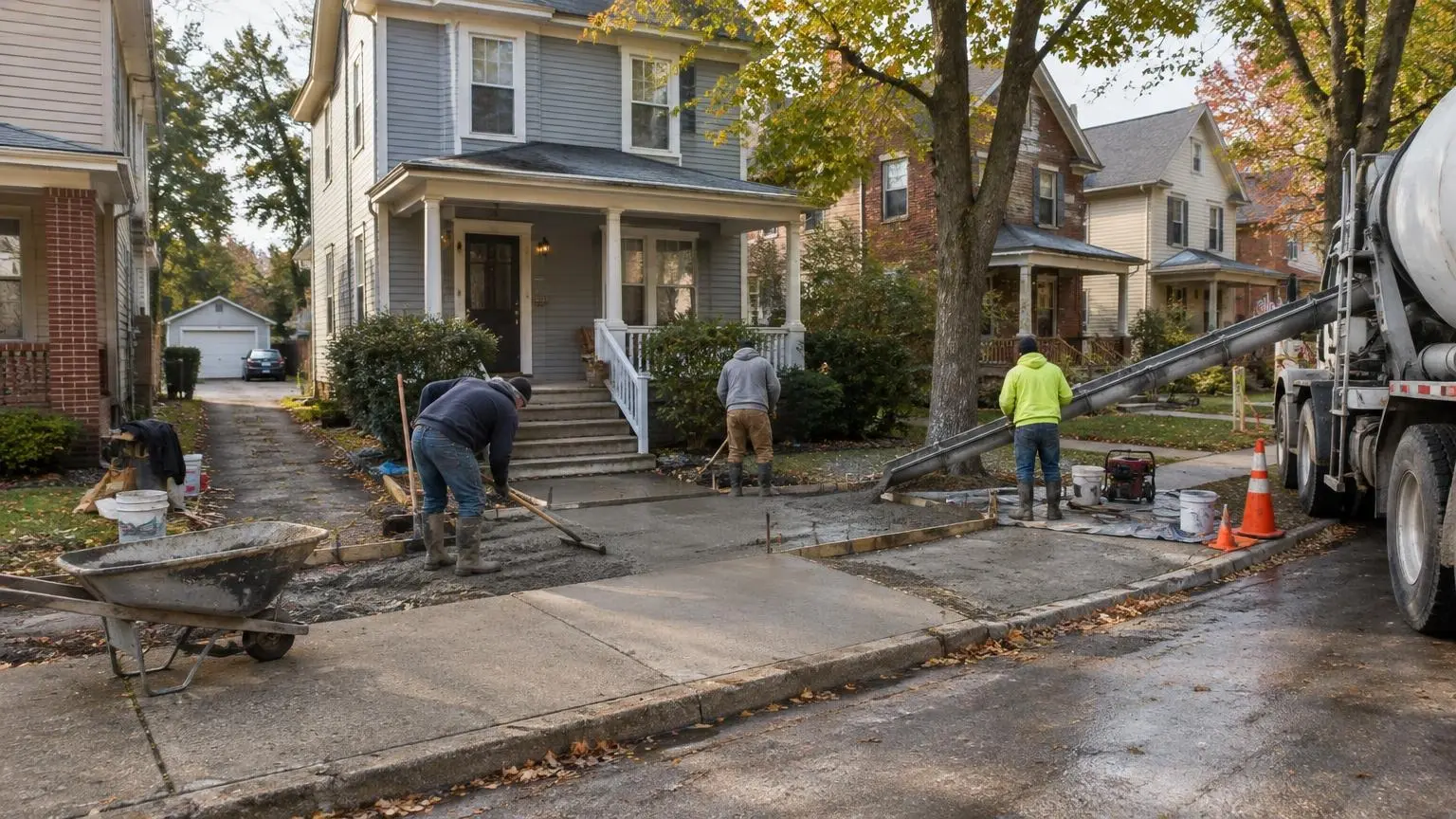
Stoops and walks for older row houses, and driveways and patios for the postwar homes on the west side.
- Free estimate at your property, then a written price broken into line items
- Exterior mixes are air entrained and set on a compacted stone base, with joints laid out before the pour
- Curb, apron and public-sidewalk rules looked up for your street before anything is scheduled
Two Kinds of Albany Concrete
Albany is really two cities for concrete contractors. Wikipedia describes its housing as mostly row houses in the older sections near the river, two-family homes that date mainly from the late 19th century, and one-family houses built after World War II toward the west end. The capital had 99,224 residents and 48,031 housing units at the 2020 census, and the concrete each kind of home needs is very different.
Near the river: stoops, areaways and tight lots
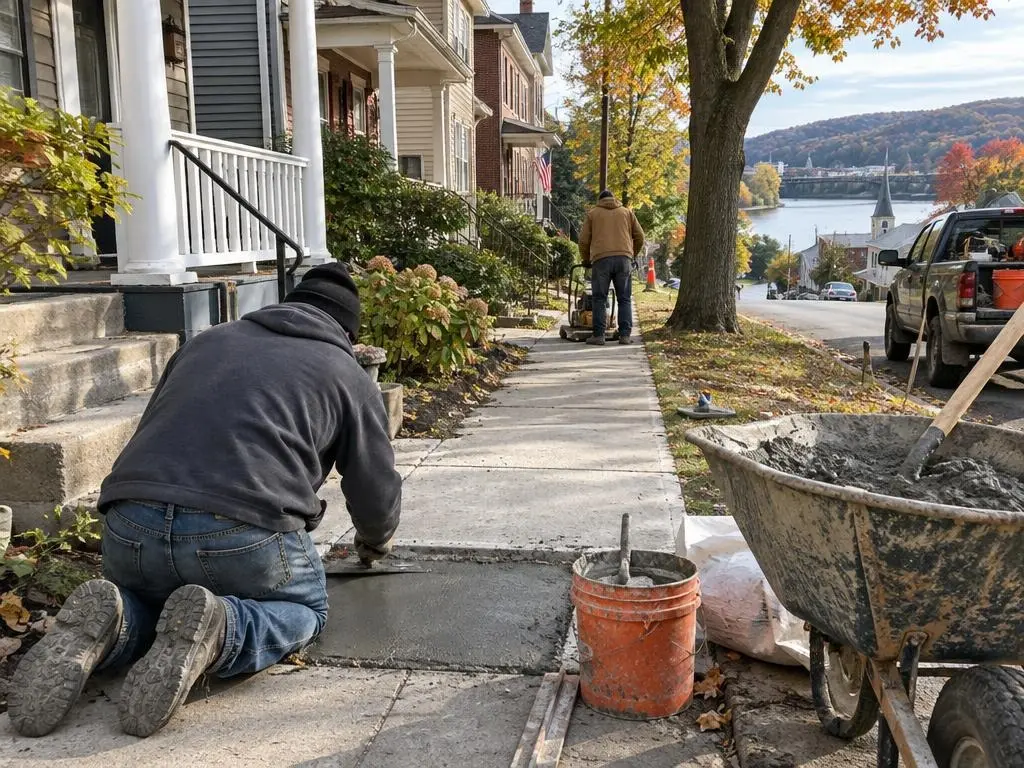
In the older neighborhoods, such as Arbor Hill, Center Square and the South End, a typical project is small in square footage and big on detail. Row houses often have a front stoop right on the sidewalk, a narrow side or back walk, and a tiny rear yard. Work there means:
- Hand demolition and wheelbarrow access where a machine cannot fit
- Rebuilding stoops to the height of an existing door and sill
- Keeping water away from old foundations that share walls with the neighbors
- Pouring small patios that turn a back yard into usable space
We plan these jobs carefully around neighbors, parking and access, since the street is usually the only staging area.
Toward the west end: driveways and patios
West of the old core, postwar single-family homes bring more typical suburban work: Concrete Driveways due for replacement, back Concrete Patios, front walks and Garage & Shed Slabs for detached garages.
Sandy ground and cold winters
Albany's interior soils are described as sandy, a remnant of ancient Lake Albany. The Albany Pine Bush, once about 25,000 acres, is now around 6,000. Sand drains well, which helps, but it can wash out from under a slab where downspouts or runoff concentrate. We compact the base thoroughly and keep roof water away from the edges of new concrete.
The weather is the other half of the story. Albany averages about 59 inches of snow a season, January highs average 32.8 degrees and lows 15.9, and nights at or below zero happen about nine times a year. That many freeze-thaw cycles, plus salt on stoops and walks, is why every exterior pour we do uses air-entrained concrete and why we recommend sealing new work.
Garage floors behind city houses
Many Albany homes toward the west end have a detached garage at the back of the lot, reached by a long narrow driveway or a shared alley. Old garage floors often crack into pieces and sink toward the middle, collecting water and salt every winter. Replacing one means removing the old slab, often by hand where a machine cannot reach, rebuilding the base and pouring a new floor pitched toward the door. If the driveway leading in is also failing, doing both together lets the two surfaces meet flush with no lip at the door.
We can usually finish a single-car garage floor in a short visit, then keep vehicles off it until the concrete has gained enough strength. We tell you that date before we leave.
Shared walls, shared walks
A row house stoop often butts against the neighbor's stoop, and a back walk may run along a shared fence or a common alley. Before we break anything out, we mark exactly where your concrete ends, protect the neighbor's side, and plan the new slab so it sheds water away from both foundations. Work on the public sidewalk or in a historic district can have city requirements. We check with the City of Albany on what applies before we quote that part of a job.
Albany Facts for Homeowners
- Housing mix. Mostly row houses near the river, two-family homes from the late 19th century, and one-family houses built after World War II toward the west end.
- Size. The 2020 census counted 99,224 residents and 48,031 housing units in the capital city.
- Sandy soils. Interior soils are sandy, a remnant of ancient Lake Albany; the Pine Bush has shrunk from about 25,000 acres to roughly 6,000.
- Winter weather. About 59 inches of snow a season, January lows averaging 15.9 degrees, and around nine nights a year at or below zero.
Albany Questions
Can you rebuild a row house stoop without a machine?
Yes. On tight city lots we break out and remove old concrete by hand, form the new stoop to the door height and place concrete with wheelbarrows or a pump when needed.
Who is responsible for the sidewalk in front of my Albany house?
Public sidewalks can have city rules separate from your private walk. We check with the City of Albany before quoting that portion so you know what applies.
My back yard is tiny. Is a patio worth it?
Often it is the most useful thing you can do with a small yard. A poured slab can fill odd shapes, run to the fence lines and give you a flat, dry surface for a table and grill.
Free Estimates in Albany, NY
Free estimates from Center Square to the west end.
Concrete Contractors Near Albany
- Concrete Contractors in Schenectady, NY
- Concrete Contractors in Niskayuna, NY
- Concrete Contractors in Rotterdam, NY
- Concrete Contractors in Glenville, NY
- Concrete Contractors in Scotia, NY
- Concrete Contractors in Clifton Park, NY
- Concrete Contractors in Colonie, NY
- Concrete Contractors in Latham, NY
- Concrete Contractors in Loudonville, NY
- Concrete Contractors in Troy, NY
- Concrete Contractors in Cohoes, NY
- Concrete Contractors in Watervliet, NY
- Concrete Contractors in Guilderland, NY
- Concrete Contractors in Bethlehem, NY
- Concrete Contractors in Halfmoon, NY
- Concrete Contractors in Ballston, NY
- Concrete Contractors in Ballston Spa, NY
- Concrete Contractors in Malta, NY
- Concrete Contractors in Saratoga Springs, NY
- Concrete Contractors in Waterford, NY
- Concrete Contractors in Amsterdam, NY
- Concrete Contractors in Duanesburg, NY